Why digital menus became the standard
Printed menus are losing ground fast. In 2020, QR codes were a health measure. By 2026, they are what diners expect before they even sit down. A digital menu is no longer a "nice-to-have". It's the first impression your restaurant makes.
The economics are compelling too. A single price change on a printed menu means reprinting the entire stack. On a digital menu, you update one field and every customer sees the new price the next second.
What a modern digital menu should do
Not every QR-code menu is equal. Here is what separates a real platform from a simple PDF link:
1. Multi-language out of the box
If your customers speak both Arabic and English (or more), your menu needs to switch instantly without any re-upload. Proper hreflang and dir="rtl" support matters for search visibility too.
2. Real-time updates
Sold out of today's special? One click and it disappears from every customer's phone. No need to produce another paper menu.
3. Ordering, not just reading
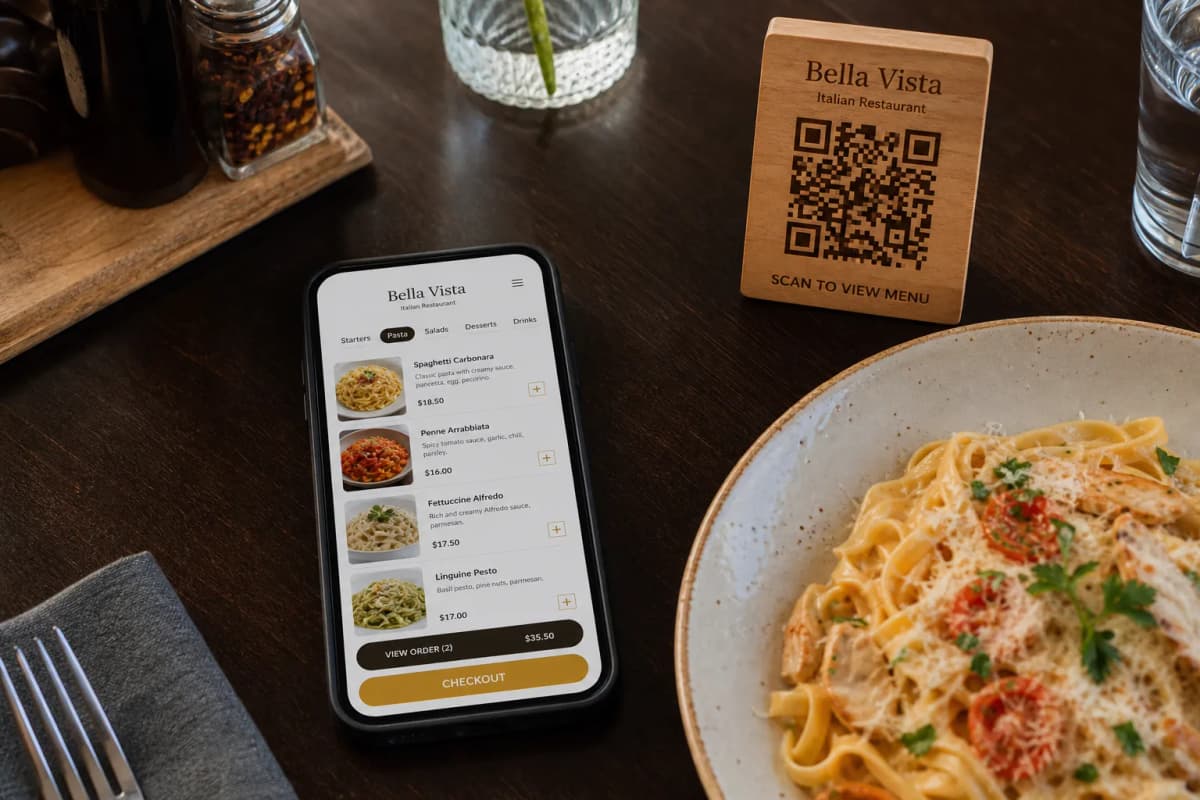
The best digital menus let customers order from the table, through WhatsApp, or pick up at the counter, straight from the same screen they used to read the menu.
6. Analytics that tell you what's working
How many views did your menu get today? Which dishes do people tap on but not order? A good platform shows you this without spreadsheets.
How to launch in under an hour
- Pick a template that matches your brand. Hundreds exist, from elegant fine-dining to bright fast-food.
- Upload your menu with photos and prices, organized into categories.
- Set your languages: most platforms translate automatically with AI.
- Print your QR code and place it on tables, menus, and entrances.
- Track results from the admin dashboard.
Bottom line: a digital menu is not about replacing paper. It's about giving customers an experience paper physically cannot provide: instant search, multiple languages, ordering, and your real-time updates.
Common objections (and honest answers)
"My customers are older, they won't use QR codes." In most markets now, 90%+ of diners have used a QR menu at least once. Offer a printed version as a backup if it makes you comfortable.
"My internet is unreliable." Good digital menus cache on the customer's phone. Your Wi-Fi only matters for the first scan.
Ready to start?
Browse our template gallery, or talk to our team for a custom design built around your brand.